On 15 September 2026 the European Commission and the European University Institute (EUI) announced the launch of the Energy Regulation Academy (EnRA) – an EU-funded initiative aimed at supporting national authorities in translating reforms in the electricity sector into practical results across all Member States. The initiative is set to run for three years.
The training programme is driven by a period of significant change in Europe’s electricity sector, driven by both technological developments and the geopolitical landscape. The reforms adopted in recent years are having an impact on the structure of the electricity market, investment in renewable energy, the planning and authorisation of grid infrastructure, system flexibility, digitalisation and consumer protection.
The effectiveness of these reforms depends to a large extent on the capacity of national authorities to implement legislation in a timely manner, to develop appropriate regulatory instruments and to adapt their institutions and working methods. The Commission notes that, in 2026, all Member States received a specific recommendation in the field of the electricity sector as part of the European Semester. The limited administrative capacity of regulatory authorities, ministries and other public institutions is one of the factors delaying the practical implementation of reforms. It is precisely this need that EnRA aims to address by placing public sector professionals at the heart of the energy transition.
The Academy is funded by the EU through the Technical Support Instrument (TSI) and is implemented by the Florence School of Regulation (FSR) at the EUI in cooperation with the Commission’s Working Group on Reforms and Investments (SG REFORM). The TSI is the Union’s programme designed to assist Member States in the preparation and implementation of structural reforms, whilst the FSR is a distinct academic unit within the EUI with many years of experience in the field of energy regulation.
Target audience and scope
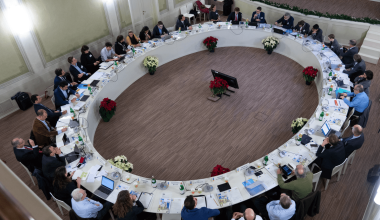
The initiative is aimed at specialists from regulatory authorities, ministries and other public institutions involved in energy policy and regulation. The scope is pan-European: support is directed at the relevant ministries and national regulatory authorities (NRAs) in all 27 Member States. It is envisaged that the EUI will periodically host officials and technical experts from Member States in Florence throughout the three-year duration of the programme.
Formats of support
The Academy’s programme is structured around several key formats of activity:
- Face-to-face training courses, combined with online training, focusing on the more complex challenges of reform in the sector. These courses will take place in Florence, Vienna and Brussels.
- Thematic (regional) workshops, which bring together representatives from Member States to discuss challenges requiring cross-border coordination and shared solutions.
- Tailored consultations, through which Member States receive support from policy experts, tailored to their specific needs, for their ongoing reforms.
- Practical technical seminars that explain policy developments and links with other policy areas in accessible language.
Beyond training, the Academy aims to build a European community of practice for continuous mutual learning and regulatory cooperation. The idea is that the experience gained in one country should guide the work in others, thereby contributing to a more coordinated implementation of reforms in the electricity sector and a more integrated Energy Union. According to FSR Director Leonardo Mees, the programme is structured around the real-world challenges faced by professionals when implementing complex reforms, combining policy-oriented training with practical case studies, expert guidance and peer-to-peer exchange.
The first training course is taking place from 7 to 28 September, with a residential module from 16 to 18 September 2026 and focused on contracts for difference (Contracts for Difference, CfDs) and power purchase agreements (PPAs) – two instruments of growing importance for the financing of low-carbon generation capacity.
The programme’s thematic scope includes the structure of the electricity market, investment in electricity transmission networks, renewable energy, digitalisation and artificial intelligence. The Commission notes that the curriculum will evolve over time in line with EU policy priorities and the needs of Member States.
For countries such as Bulgaria, whose regulatory and administrative structures are set to implement large-scale reform of the market model, funding for new generation capacity and grid expansion, EnRA offers access to structured training, partnership-based exchanges and expert support without any direct financial commitment from the national budget. The success of the initiative will depend on the extent to which national authorities utilise these formats and translate the knowledge gained into concrete regulatory decisions.
Further reading
- European Commission, Directorate-General for Energy, “Commission launches Energy Regulation Academy to support public officials in implementing EU energy measures”, 15 September 2026.
- Florence School of Regulation (EUI), Energy Regulation Academy.